Shopping for a hybrid? Three measurements tell you more than the label does
D Strouse Photo Design- Subject
- Choosing, fitting and living with a general-purpose bicycle for paved roads, bike paths and short errands
- Editor
- The D Strouse Photo Design team
- Subject
- Choosing, fitting and living with a general-purpose bicycle for paved roads, bike paths and short errands
The category name tells you only that the bike has flat bars and is meant for pavement. Two bikes wearing it can differ more from each other than either does from a road bike.
- 01
Measuring the drop yourself
Stand the bike level, then measure from the top of the saddle straight down to the top of the grips. That single figure predicts how much weight your hands carry.
- 02
What a stem swap buys
Changing the stem typically gains or loses about an inch of bar height, sometimes less. Beyond that you are looking at a frame with different geometry, not a parts change.
- 03
Reading the low gear
Compare the teeth on the smallest front chainring with the largest rear cog. A smaller ring against a bigger cog gives you the gear you need on a steep climb.
Test on the worst hill. A flat parking lot loop tells you nothing about gearing. Ride the steepest climb on your regular route before deciding the bike has enough range.
Order of reversibility. Tires are cheap and quick to change, gearing is a middling job, and riding position is effectively fixed at purchase. Spend your attention in reverse order of that list.
Cost of a bar conversion. New bars, stem, longer cables and shop labor add up quickly and still leave you with the original frame geometry. Buying the right shape first is usually cheaper.
Two bikes can sit under the same sign at the same shop, cost within fifty dollars of each other, and ride so differently that you would not guess they were related. One has 28mm tires, a saddle four inches above the grips, and gearing that runs out on a steep driveway. The other weighs thirty-six pounds, rolls on 45mm rubber, and holds you upright enough to see over parked cars. Both are sold as general-purpose bikes for pavement and paths. The label is a shelf, not a description, and the difference between those two bikes is worth understanding before the money leaves your account.
The useful move is to stop reading the category name and start reading three numbers, all of which appear in the specification table or can be measured in the parking lot. Tire width, the vertical drop from handlebar to saddle, and the spread of the gearing between highest and lowest. Those three predict most of what you will feel in the first month. They also differ sharply in how much it costs to change your mind later, which is the part nobody mentions on the sales floor.
Tire width sets the ride, and it is the cheap variable
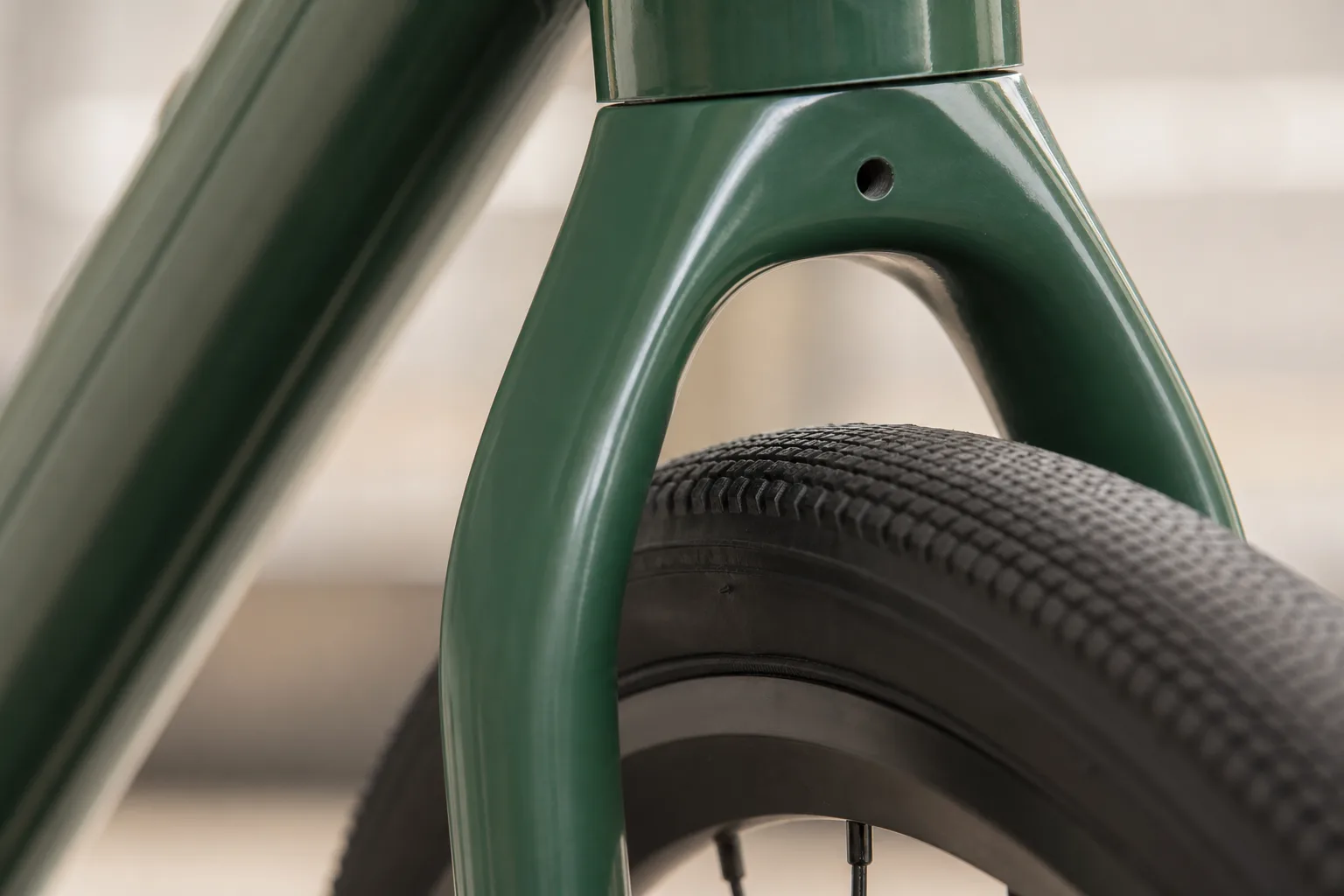
Width determines how much air you are riding on, and air is what absorbs a seam in the asphalt. Somewhere around 32mm the bike stops transmitting every crack to your hands; somewhere past 45mm it starts feeling deliberate and slow to change direction, which some riders want and others find sluggish. The good news is that this is the least permanent of the three. A pair of tires runs a fraction of what the bike cost, fits in an afternoon, and can take a harsh commuter bike to something you would ride on a gravel path. Check the clearance at the fork and chainstays first, because a frame that only swallows 35mm has made the decision for you.
Handlebar-to-saddle drop decides where your weight goes
Measure from the top of the saddle down to the top of the grips. A flat-bar road bike may put the bars two or three inches below the saddle, which leans you forward, loads your hands, and rewards you with speed and a fighting chance in a headwind. A path bike may put the bars level with the saddle or above it, which moves your weight onto the saddle, frees your hands, and lifts your eyes. Neither is correct. But this number is the expensive one to fix, because a stem swap buys you maybe an inch, and past that you are buying a different frame.
That is where the shopping order matters. If you already know you want to sit upright, look at the swept-back bars and tall head tubes of a Hybrid Bike built around comfort rather than pace, and skip the flat-bar road machines entirely rather than trying to convert one later. Conversions cost real money and rarely land where you wanted. A new stem, new bars, longer cables and an hour of shop labor can approach a couple of hundred dollars, and the frame still has the geometry it was welded with.
Gear range is about the low end, not the top
Almost every bike in this category has a high gear you will rarely spin out on a flat road. What varies is the bottom. Count the teeth on the smallest front ring and the largest rear cog: a 30 tooth ring paired with a 34 tooth cog gives you a gear you can climb a genuinely steep hill in, while a 34 and a 28 does not. Riders who live on flat ground will never notice. Riders with a hill between home and the grocery store notice within a week, and a cassette and derailleur swap to fix it is not trivial.
What the decision actually costs
Rank the three by reversibility and the shopping strategy writes itself. Tires are consumable and cheap, so buy the bike whose tires are wrong and change them. Gearing sits in the middle: a wider-range cassette is a plausible upgrade, though it sometimes drags a new derailleur and chain along with it. Position is close to fixed. Get the frame and bar height right at purchase, accept whatever tires it came with, and treat the gearing as a question to settle on the test ride, ideally on the worst hill you regularly face. The Consumer Product Safety Commission oversees the safety standards these bikes are built to, so what you are choosing between is fit and feel rather than basic soundness.
How the rest of this site is ordered
The pages follow the order the decisions actually arrive in. Sizing comes first, because a frame that does not fit cannot be rescued by parts, and knowing your number before a shop puts you on a bike changes the conversation. Then the money: what separates a low-priced bike from one at three times the figure, component by component, so you can see which differences you will feel. Then the costs that arrive after the receipt, lights, locks, fenders, a rack, and several years of service intervals, which together often run to a meaningful fraction of the purchase price.
Read the specification table with those three numbers in mind and most of the category sorts itself into two or three clear groups. The bike you want is probably in one of them, and you will know which by the end of a test ride around the block.